You found the page behind the compass.
The Buttons We Touch
Everyone stayed downstairs and it was time to start Jason and the Argonauts.
My ninth birthday began with kickball, but then fifteen of my grade school classmates wanted to box each other in my basement because neither of my parents were paying attention and, well, that's what nine-year-old boys are supposed to do at a birthday party.
My mom and I had gone to the video store to rent the movie earlier in the day, and I had no interest in watching the fight of the century between George what's-his-name and Kevin, who I didn't want to invite. I had seen the cover of this movie often at the store, and it was rated PG. In the 80s, PG meant something a little stronger than it does in the age of TikTok and algorithmic filtering. This was probably the first PG movie my mom approved.
Ironically, I wasn't allowed to touch the VCR myself.
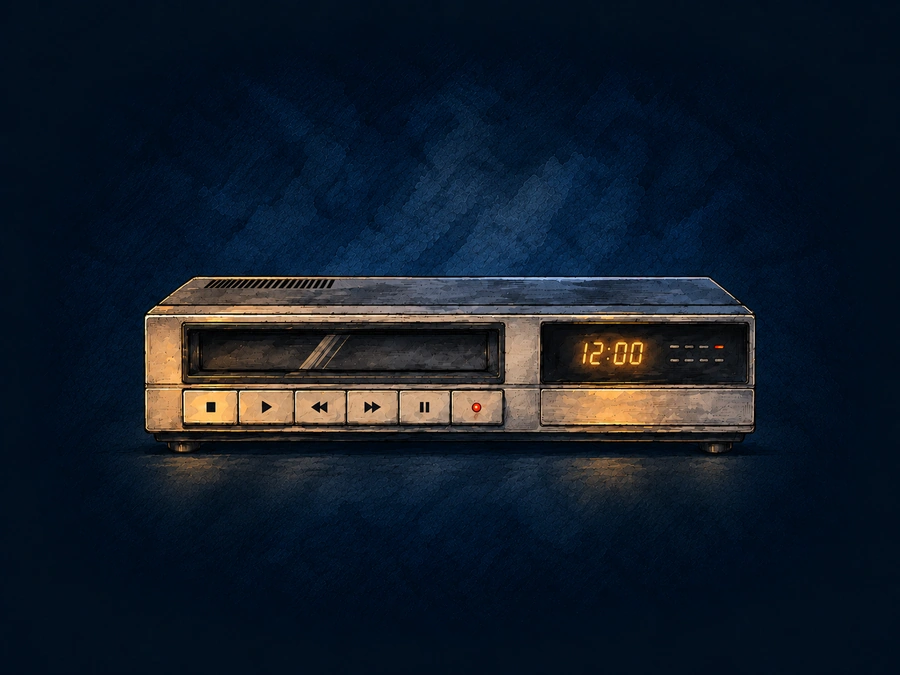
My parents, being Baby Boomers, were generally reluctant to embrace all things with buttons and circuits. They were in their thirties and I was nine. They lived through the Vietnam War and the terror of an escalating Cold War.
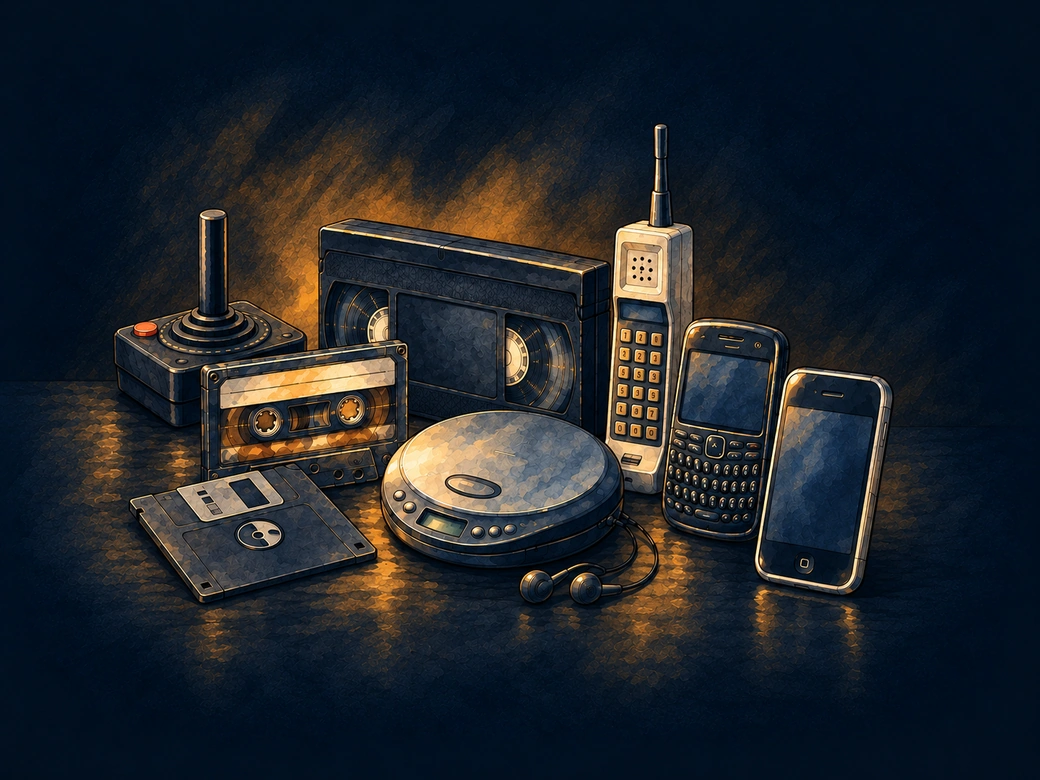
From my first game of Donkey Kong on Atari to the partial writing of this essay on my buttonless, circuit-filled communication instrument, devices were tools to be used, played with, broken, fixed, upgraded, and cursed at in moments of disgust.
I have mourned deaths from dysentery playing The Oregon Trail. I used summer-job money to pay late fees at Blockbuster. I traded tapes I made of Billy Joel, Journey, and U2. In college, I sold anti-skip CD players to help pay for school, along with Bell Atlantic brick-looking cell phones. After college came BlackBerrys, Facebook, and iPhones.
I initially relished the opportunity to become the default tech support representative for my extended family. At some point, when cell phones started needing firmware updates, I knew I'd need to set aside time for phone calls that began, "I don't know where they put that thing I always use." Nonetheless, that never tempered my enthusiasm for what was next.
That instinct to be the first one to figure out the new thing, followed by the first phone call to help everyone else learn it, turned out to be fairly typical for my generation. Years ago, I learned there was even a name for us: Xennials. We are old enough to remember the analog world clearly and young enough to have adapted as nearly all of it became digital. I remember an aunt who couldn't fathom why I would buy a CD player the year after I bought a cassette player.
Thirty years ago, I filled out job applications and handed them to the manager on duty.
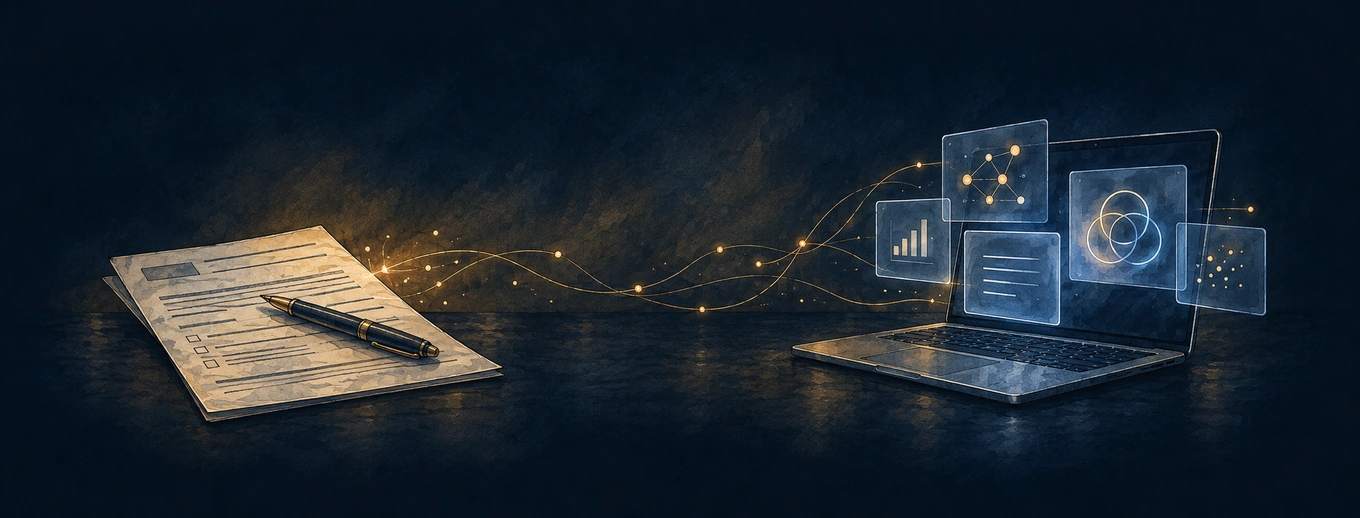
In 2026, I convened a cadre of artificial intelligence models.
I now click between AI models that help me research and build the website on which this essay is hidden. They have also apologized to me dozens of times for misunderstanding context or confidently giving me an answer to a question I did not ask.
This website has gone through more than 250 revisions, and this essay has gone through more than twenty versions.
By about the tenth version, Claude, ChatGPT and Gemini had already reminded me that my creative and persuasive writing skills had gotten rusty.
As I built this website, I wanted to learn how different AIs "thought." I started building a virtual boardroom wherein multiple AI models could evaluate the same business problem using my professional experience and values as part of their framework.
The idea was to see what might happen if the models challenged one another rather than simply answered me.
I never got that far.
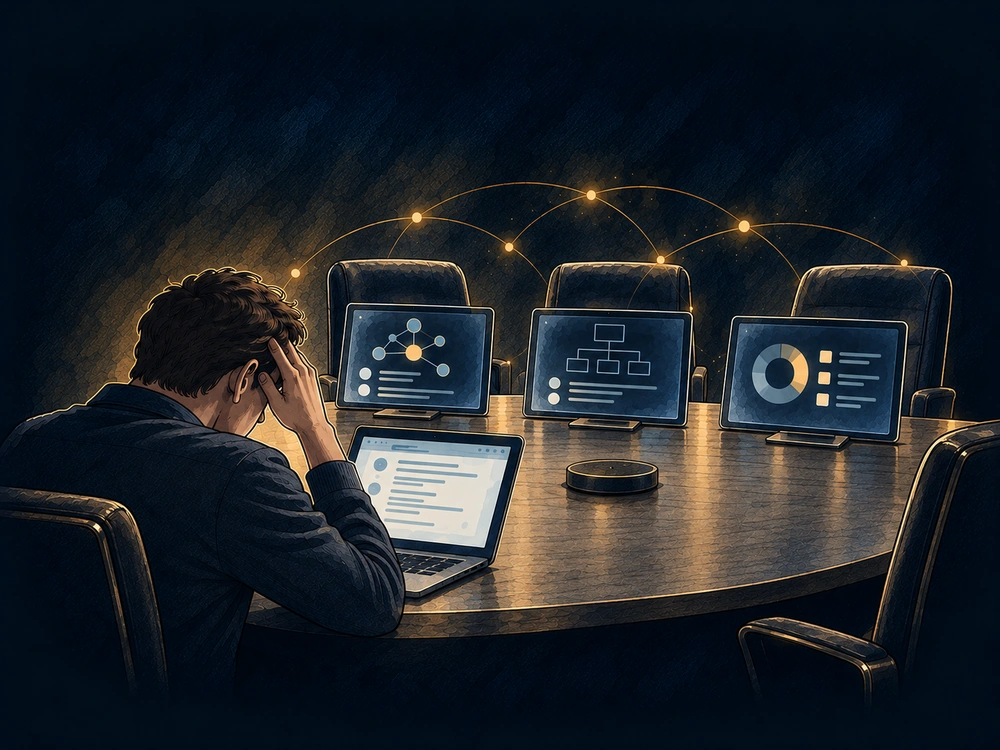
Before I started playing with it at length, I hit an engineering speed bump. Years of being face-to-face with clients made the problem obvious. The boardroom kept asking the person on the front end for more detail before it would give anything useful back. That made sense, because better information should produce a better answer. But even I got to the point of thinking, "Dammit, just give me something back." If this tool was going to represent me, I couldn't ask someone else to put up with that frustration.
So, I scuttled it.
The boardroom was doing what I asked it to do. More detail should have produced a better answer. But I was so focused on the answer that I hadn't thought enough about what I was asking a person to go through to get it. That matters, too, even if there isn't an easy number attached to it.
Dario Amodei has described powerful AI as a future "country of geniuses in a datacenter." What stopped my boardroom wasn't a lack of intelligence. It was something much more ordinary: what I was asking of the person sitting on the other side of it.
Some of the older people in my life still approach AI as something foreign enough that they can choose not to understand it. Younger people have grown up with answers and entertainment at a whim. Now AI takes that even further.
Xennials remember what came before all of this.
AI feels faster.
AI's growing role in diagnosing and treating cancer is of particular interest to me for reasons close to home. That is exactly the kind of progress I want.
We may not realize we have gone too far until AI has already begun taking the place of smaller human moments that create unseen value. By then, we may only be beginning to understand what we sacrificed.
There are private conversations that should be heard by another person who knows us and there are times when the fastest answer may not be the one we need.
Some things only show their importance after they begin to disappear from our lives. The hour-long phone calls about dynamics between friends are fading. Trading music has all but disappeared.
My friends and I have developed a new ritual of passing around articles or videos through text that we find interesting or humorous. We now send each other AI pictures to joke about one of us encountering a challenge that could previously only be described by words on a phone call or in person.
Have these AI-enhanced text messages brought new value to our relationships? Perhaps, because we already know each other and our idiosyncrasies and tendencies well.
When I was debating decisions on this website, I could have required a viewer to enter an email address. I decided I'd rather trust that an initial connection will come organically than create another data-capture point that already exhausts all of us.
My measurable data point will be the first email and the first phone call of connection.
I have spent much of my career in sales. AI can give me an in-depth briefing on a company before I ever talk to the client. It still doesn't tell me what matters to the person on the other side of the table. That part still comes from experience.
Revenue matters. Quota matters. Results matter.
The achievements tied to measurable numbers don't explain what it took to get there, or what made them worth doing.
The adage "people buy from people" is incomplete. People buy from people they trust.
Forty years ago, I understood the VCR better than the adults in the room, but they decided who was allowed to touch the controls. In my forties, I'm still ready to push the buttons and explore the blinking lights.
The years since have taught me which buttons not to push.