With the right permissions, an approved AI tool could help organize meeting notes and separate what was heard from what was assumed. It could also point to questions that remain unanswered.
For more than 15 years, the first request from a client was rarely the whole problem. The work was figuring out what was happening around it, who it affected, and what the client was actually trying to change.
AI is already useful for research and testing assumptions. In enterprise sales, it could help with more than preparation. Before a meeting, it could watch for meaningful changes. Afterward, it could help organize what was learned and test whether the next step still makes sense for the client.
An alert could provide a place to start. It would not create an opportunity.
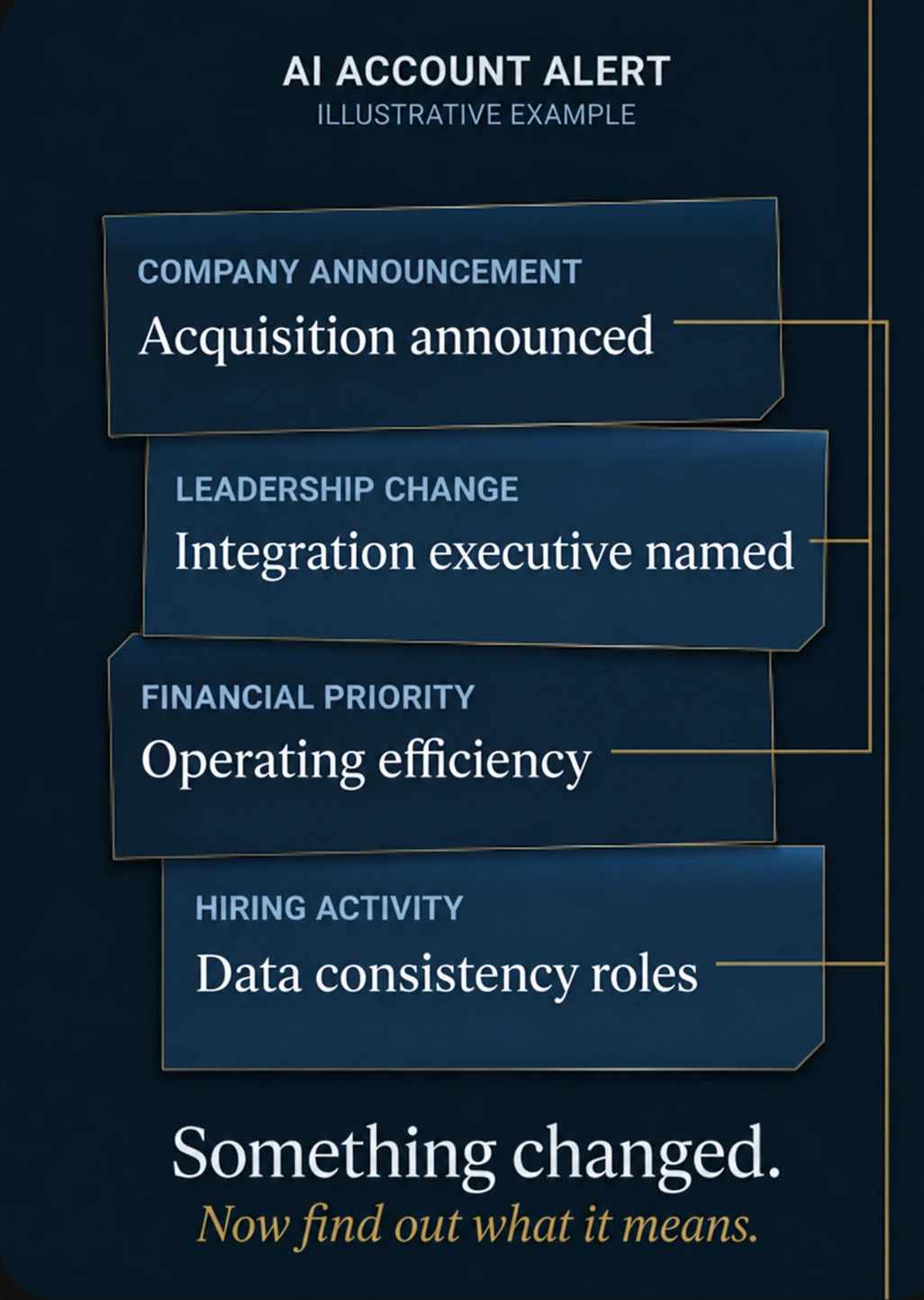
An alert can show that something changed. It cannot show what that change means to the people doing the work.
It cannot explain who is living with the problem. It cannot tell what the client cannot afford to disrupt or how the work happens today. That takes conversation. The people closest to the work may confirm the pattern. They may also change it completely or make clear that technology is not the answer.
AI could help in different ways as the work moves forward. The people responsible for the work would still make the decisions.
With the right permissions, an approved AI tool could help organize meeting notes and separate what was heard from what was assumed. It could also point to questions that remain unanswered.
A tool such as NotebookLM could help locate an internal procedure or find the right product or contract language. The original source would still need to be checked. The right people would still need to be involved.
AI could compare a possible recommendation with what the client said mattered most and flag a gap. It might also help make the explanation clearer. It would not decide the tradeoff or make the recommendation.
Outcome Orchestration keeps the recommendation from being judged on technology alone. It has to make financial sense and work inside the client's operation. The technology has to fit. The people responsible for it have to be able to make it work.
Is the result worth the cost and effort?
Will it work in the way the client actually operates?
Will it fit the existing systems? Can the data and security requirements be met?
Do the right people understand it? Do they have the capacity to make it work?
Someone has to decide whether information belongs in an AI tool. The source has to be checked before the answer is trusted. If someone else owns the decision, that person belongs in the conversation.
AI can surface something that was missed or offer another way to look at it. It can help test whether the recommendation still fits. It cannot decide which concern matters most or what someone is prepared to stand behind.
Responsibility for the client relationship does not shift to AI. It stays with the person who has earned their trust.